What Does Healthy Aging Actually Mean? Building Strength, Energy, and Resilience for the Years Ahead

For much of modern medicine, success in aging was measured primarily by one number: lifespan. How long can we keep someone alive? Advances in cardiovascular medicine, cancer treatment, infectious disease, surgery, and preventive care have made remarkable progress toward that goal. But living longer has introduced another question that may matter even more to the person actually living those additional years: How many of them will be spent feeling well enough to participate fully in life?
That distinction is often described as the difference between lifespan and healthspan. Lifespan measures how long we live. Healthspan describes the years during which we maintain meaningful physical function, cognitive ability, independence, and freedom from disabling disease. The goal of healthy aging is not to pretend that biological aging can be stopped. It is to preserve as much physiological capacity as possible while reducing the burden of preventable disease and premature functional decline.
This is also where the term "anti-aging" can become misleading. Aging itself is not a disease, and there is no infusion, hormone, peptide, supplement, or medication that makes someone biologically young again. A more useful approach is to understand which systems tend to lose capacity with age, which changes can be influenced, and where medical intervention actually adds value.
Aging Is Not One Biological Process
We often speak about aging as though a single switch gets flipped somewhere around middle age. In reality, aging represents thousands of changes occurring across multiple biological systems at different rates. Muscle tissue responds differently to protein and exercise. Bone remodeling changes. Hormone production shifts. Blood vessels gradually become less elastic. Mitochondrial function and cellular energy metabolism change. Immune regulation becomes less precise, and low-grade chronic inflammation becomes more common. Sleep architecture also changes, often resulting in less deep sleep and more nighttime awakening.
These changes interact. A person who gradually loses muscle may become less active, which can further reduce cardiovascular fitness and insulin sensitivity. Poor sleep can worsen appetite regulation and glucose metabolism. Increasing visceral fat can contribute to inflammation and metabolic dysfunction. Chronic pain may reduce movement, which leads to further deconditioning. What begins as a relatively small change in one system can eventually affect several others.
This is why healthy aging cannot be reduced to a single laboratory value or treatment. The body functions as an interconnected system. Preserving health requires looking at the trajectory of the whole person rather than chasing isolated biomarkers.
Muscle Is Metabolic Tissue—and an Independence Reserve
One of the most consequential changes associated with aging is the gradual loss of skeletal muscle mass, strength, and power. Severe age-related muscle loss is known as sarcopenia, but functional decline begins long before someone meets a clinical definition.
Muscle is easy to think about primarily in terms of appearance or athletic performance. Physiologically, it does much more. Skeletal muscle is a major site of glucose disposal and therefore plays an important role in insulin sensitivity and metabolic health. It supports balance, protects joints, contributes to bone loading, and provides the physical reserve needed to recover from illness, surgery, or periods of inactivity.
The practical consequences of losing that reserve often appear gradually. Carrying groceries becomes harder. Getting up from the floor requires more effort. Stairs become something to avoid. Walking speed slows. A minor illness that once caused a few days of fatigue can produce weeks of deconditioning.
For this reason, strength is one of the most meaningful markers of healthy aging. Resistance exercise becomes increasingly valuable as we get older, not because everyone needs to become an athlete, but because the body requires a reason to retain metabolically expensive tissue. Adequate dietary protein provides the raw material; resistance training provides the signal that tells the body the muscle is still needed.
This also changes how we should think about weight loss later in life. Losing twenty pounds while losing substantial muscle is physiologically different from losing twenty pounds while preserving lean mass. The bathroom scale cannot distinguish between the two.
Metabolic Health Is Bigger Than Body Weight
Body weight receives enormous attention in wellness medicine, but weight alone is a poor summary of metabolic health. Two people of similar weight can have very different levels of visceral fat, muscle mass, insulin sensitivity, cardiovascular fitness, blood pressure, lipid profiles, and disease risk.
As we age, insulin sensitivity often declines, particularly when physical activity decreases and visceral fat increases. The pancreas compensates by producing more insulin to keep blood glucose controlled. This compensation can persist for years before fasting glucose or hemoglobin A1C finally crosses into a diabetic range. In other words, metabolic dysfunction can be developing well before someone is told that their "sugar is high."
This is why healthy aging should include attention to blood pressure, glucose regulation, lipids, waist circumference or body composition when useful, physical activity, and family history—not simply weight.
Medical weight-management medications, including GLP-1–based therapies, have changed obesity medicine substantially and can produce meaningful improvements in weight and cardiometabolic risk for appropriate patients. But the quality of weight loss still matters. Reduced appetite can make it easier to consume too little protein, and rapid weight loss can include lean tissue as well as fat. A healthy-aging strategy therefore asks not only how much weight is being lost, but what is being preserved while it happens.
Cardiovascular Fitness Is a Form of Physiological Reserve
Strength helps us move against resistance. Cardiovascular fitness determines how effectively the heart, lungs, blood vessels, and muscles work together to deliver and use oxygen during activity. Both matter for maintaining independence.
A person does not need to run marathons to benefit from cardiovascular conditioning. Walking briskly, cycling, swimming, hiking, dancing, and many other forms of sustained movement challenge the cardiovascular system. Regular activity helps maintain vascular function, glucose regulation, blood pressure, mood, and physical endurance.
Cardiorespiratory fitness also represents another form of reserve. Someone with greater cardiovascular capacity has more room between what everyday life requires and what their body is capable of producing. Climbing two flights of stairs uses a smaller percentage of their total capacity. An illness or temporary period of inactivity therefore begins from a higher baseline.
That idea—building reserve rather than merely treating disease—is central to healthy aging.
Bone Health Deserves Attention Before a Fracture
Bone is living tissue that is continuously being broken down and rebuilt. With age, and particularly with hormonal changes associated with menopause and declining sex hormones, the balance between bone formation and breakdown can shift. Over time, this may result in osteopenia or osteoporosis.
Unfortunately, bone loss is largely silent until it becomes clinically significant. A person cannot feel their bone density decreasing. Sometimes the first obvious sign is a fracture.
Resistance training and weight-bearing activity provide mechanical signals that help maintain bone. Adequate protein, calcium, vitamin D, hormonal health, medication history, smoking, alcohol use, and genetics also influence risk. Appropriate screening becomes increasingly important with age and individual risk factors.
Bone health also demonstrates why healthy aging cannot focus exclusively on what makes someone feel better today. Some of the most valuable interventions are protecting capacity that a person may not realize they are losing.
The Brain Ages With the Body
Cognitive health is sometimes discussed as though the brain exists independently from the rest of human physiology. It does not. The brain depends on adequate blood flow, oxygen delivery, metabolic health, restorative sleep, physical activity, social engagement, and countless biochemical processes occurring throughout the body.
Cardiovascular risk factors such as hypertension, diabetes, and smoking do not affect only the heart. They can also affect the blood vessels supplying the brain. Physical activity has repeatedly been associated with better cognitive and functional outcomes. Sleep supports memory consolidation and normal neurological function. Hearing loss, social isolation, depression, and inactivity can also influence cognitive health and quality of life as people age.
There is understandable interest in supplements and emerging treatments marketed for "brain longevity." But protecting the brain still begins with remarkably unglamorous fundamentals: move the body, protect cardiovascular health, sleep adequately, maintain social connection, address hearing and vision problems, continue learning, and treat medical conditions appropriately.
Healthy aging should preserve not merely the ability to remember facts, but the ability to remain curious, connected, adaptive, and engaged with life.
Sleep Is Active Biological Maintenance
Sleep is often treated as downtime—as though the body temporarily switches off until morning. Physiologically, the opposite is closer to the truth. Sleep is an active period of neurological, hormonal, metabolic, and immune regulation.
Chronic sleep deprivation can impair glucose regulation, increase appetite, affect mood and concentration, alter pain sensitivity, and reduce physical performance. Poor sleep also makes almost every other health behavior harder. People who are exhausted are less likely to exercise consistently, more likely to rely on convenience foods or excess caffeine, and often have less psychological capacity to manage stress.
Sleep can become more fragmented with age, but persistent poor sleep should not automatically be accepted as normal. Sleep apnea, medications, alcohol, pain, urinary symptoms, hormonal changes, anxiety, and other conditions may all interfere with restorative sleep.
Before investing heavily in sophisticated longevity interventions, it is worth asking a basic question: Is the body consistently receiving enough high-quality recovery time to maintain itself?
Nutrition Changes From “Eat Less” to “Preserve What Matters”
Much of adult nutrition advice revolves around restriction: fewer calories, less sugar, less saturated fat, less alcohol. Those recommendations can be useful, but healthy aging introduces another concern—nutritional adequacy.
Maintaining muscle requires sufficient protein. Bone health requires appropriate nutrients. Cellular metabolism depends on vitamins, minerals, essential fatty acids, and adequate energy. Aggressive dieting, appetite suppression, gastrointestinal conditions, highly restrictive eating patterns, or simply eating less with age can make deficiencies more likely.
Protein becomes particularly important because older muscle generally responds less robustly to the same anabolic signals that worked when we were younger. This phenomenon is sometimes called anabolic resistance. It does not mean older adults cannot build or maintain muscle; it means that adequate protein intake and resistance exercise become increasingly important rather than less important.
The nutritional goal therefore shifts. Instead of asking only, How can I eat less?, healthy aging asks: Am I giving my body enough of what it needs to preserve muscle, bone, energy production, and recovery while avoiding chronic excess that contributes to metabolic disease?
Hormones Matter, but They Are Not an Explanation for Everything
Hormonal changes are a genuine part of aging. Testosterone, estrogen, progesterone, growth-hormone signaling, thyroid function, insulin, and cortisol all influence aspects of body composition, bone, sexual health, mood, metabolism, sleep, and recovery.
That biological reality has also created a large market for hormone optimization. The danger is assuming that every symptom after age forty must be hormonal.
Fatigue can result from sleep apnea, anemia, depression, chronic stress, inadequate nutrition, medication effects, or numerous medical conditions. Weight changes are multifactorial. Loss of strength may reflect years of declining physical activity. Low libido may involve hormonal, psychological, relational, medication-related, or vascular factors.
Good hormone care therefore begins with symptoms, medical history, examination, and appropriate laboratory evaluation—not with the assumption that "you are getting older, so your hormones need to be optimized."
When a clinically meaningful hormonal issue is identified, treatment may improve quality of life and health for appropriately selected patients. The goal should be restoring appropriate physiological function, not pursuing laboratory values associated with youth simply because they appear younger.
Where Do NAD+ and Peptide Therapy Fit?
NAD+ and peptide therapy receive considerable attention in longevity and wellness medicine, often accompanied by claims that move faster than the evidence.
NAD+ is a coenzyme involved in cellular energy metabolism, redox reactions, DNA repair pathways, and cellular signaling. NAD+ availability changes with age in several tissues, which has generated substantial scientific interest in whether manipulating NAD metabolism could influence aspects of aging or disease. That biology is intriguing, but it should not be translated into the claim that an NAD+ infusion reverses aging. Human research is still evolving, and the effects of intravenous NAD+ therapy on long-term healthspan have not been established.
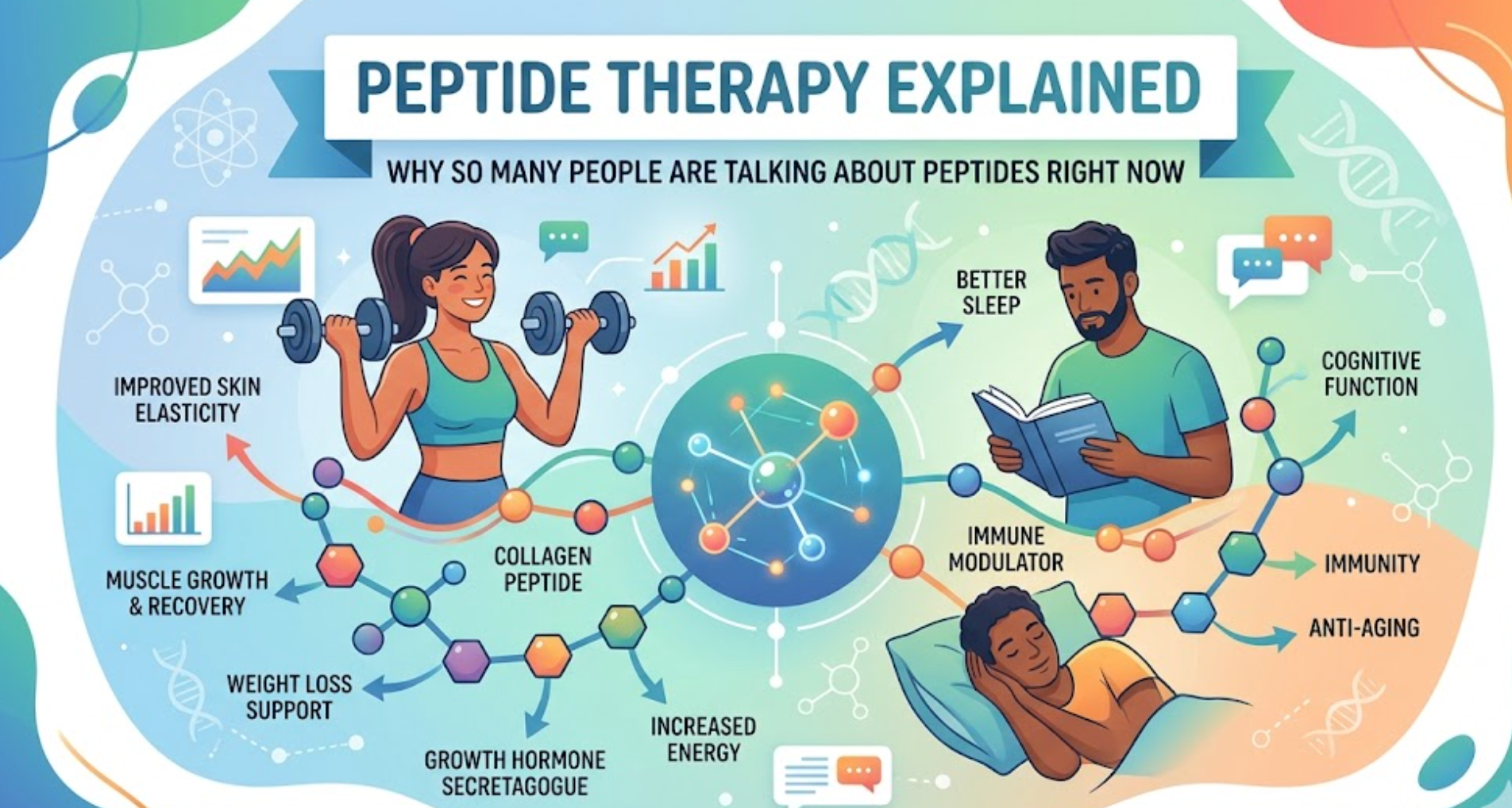
Peptides require similar nuance. Peptides are short chains of amino acids that serve many signaling functions throughout human biology. Some peptide-based medications are well studied and FDA approved for specific conditions. Other compounds marketed in the wellness and longevity space have much more limited human evidence, variable regulatory status, or uncertain long-term safety.
This does not mean these therapies have no role. It means they should be discussed honestly—as potential tools considered within an individualized medical plan rather than shortcuts around the fundamentals of health.
An NAD+ infusion cannot replace restorative sleep. A peptide cannot substitute for resistance training. Hormone therapy cannot compensate for inadequate nutrition. A metabolic medication cannot create cardiovascular fitness.
Advanced therapies make the most sense when we are clear about what biological problem we are trying to address, what evidence supports the intervention, and what the treatment cannot accomplish.
Healthy Aging Is Really About Reserve
A useful way to bring these different systems together is to think about physiological reserve.
When we are younger, many of us possess enough reserve to tolerate poor decisions remarkably well. A sleepless night is unpleasant but survivable. Several weeks without exercise may not noticeably affect mobility. Illness temporarily reduces energy, but recovery is usually rapid. We can borrow from our reserve without immediately recognizing the cost.
As reserve gradually decreases, the same stressors consume a larger percentage of available capacity. Illness produces more deconditioning. A fall has greater consequences when muscle and bone are already compromised. Poor sleep becomes harder to recover from. Surgery demands more from a cardiovascular system with less capacity.
Strength, cardiovascular fitness, metabolic health, adequate nutrition, restorative sleep, cognitive engagement, and emotional resilience all contribute to reserve. They do not make us invulnerable to aging. They give us more capacity with which to age.
That may be one of the most useful definitions of healthy aging.
Clinical Perspective
People often come into wellness medicine asking what they should add. Should I try NAD+? Should I use a peptide? Should I start hormone therapy? Would a GLP-1 help me? These can all be reasonable questions, but they are usually not the first question I want to answer.
I want to know: What are we trying to preserve or improve?
Is the problem declining energy? Loss of muscle? Poor recovery? Increasing visceral fat? Metabolic disease risk? Sexual health? Sleep? Cognitive concerns? Reduced physical capacity?
Once the goal is clear, we can begin looking for what is interfering with it. Sometimes a medical therapy is appropriate. Sometimes laboratory testing identifies something worth treating. Sometimes the highest-value intervention is much less exotic: rebuilding strength, improving sleep, eating enough protein, addressing metabolic health, or changing the amount of recovery the body receives.
The objective is not to accumulate wellness treatments. It is to preserve function.
The Bottom Line
Healthy aging is not about refusing to grow older, and it is not about attempting to turn a 60-year-old body into a 30-year-old one. Aging is real, and many biological changes cannot—and do not need to—be eliminated.
The opportunity lies in distinguishing aging from preventable loss of capacity.
We can influence muscle strength, cardiovascular fitness, metabolic health, nutrition, sleep, bone health, cognitive engagement, and many important disease risks. Medical therapies can sometimes support those goals when there is a clear indication, but they work best as part of a larger strategy rather than as substitutes for one.
The most meaningful measure of healthy aging may ultimately be less about how long we live than about how much physical, cognitive, and emotional capacity we retain while we are living.
Explore Healthy Aging at Ayafusion Wellness Clinic
Ayafusion approaches wellness and healthy aging through individualized medical evaluation rather than a one-size-fits-all "anti-aging" protocol. The goal is to understand what may be limiting energy, recovery, metabolic health, body composition, and physical function and determine which interventions are appropriate for the individual.
Depending on a patient's needs, that may include metabolic and medical weight management, hormone evaluation and treatment when indicated, NAD+ therapy, peptide therapy, IV nutrient support, and strategies designed to preserve strength, recovery, and long-term function.
Ayafusion Wellness Clinic serves patients in Downers Grove and throughout the greater Chicago area who are looking for a thoughtful, medically guided approach to health optimization and healthy aging.