Sermorelin, Tesamorelin, and Ipamorelin: How to Choose the Right Growth Hormone Peptide

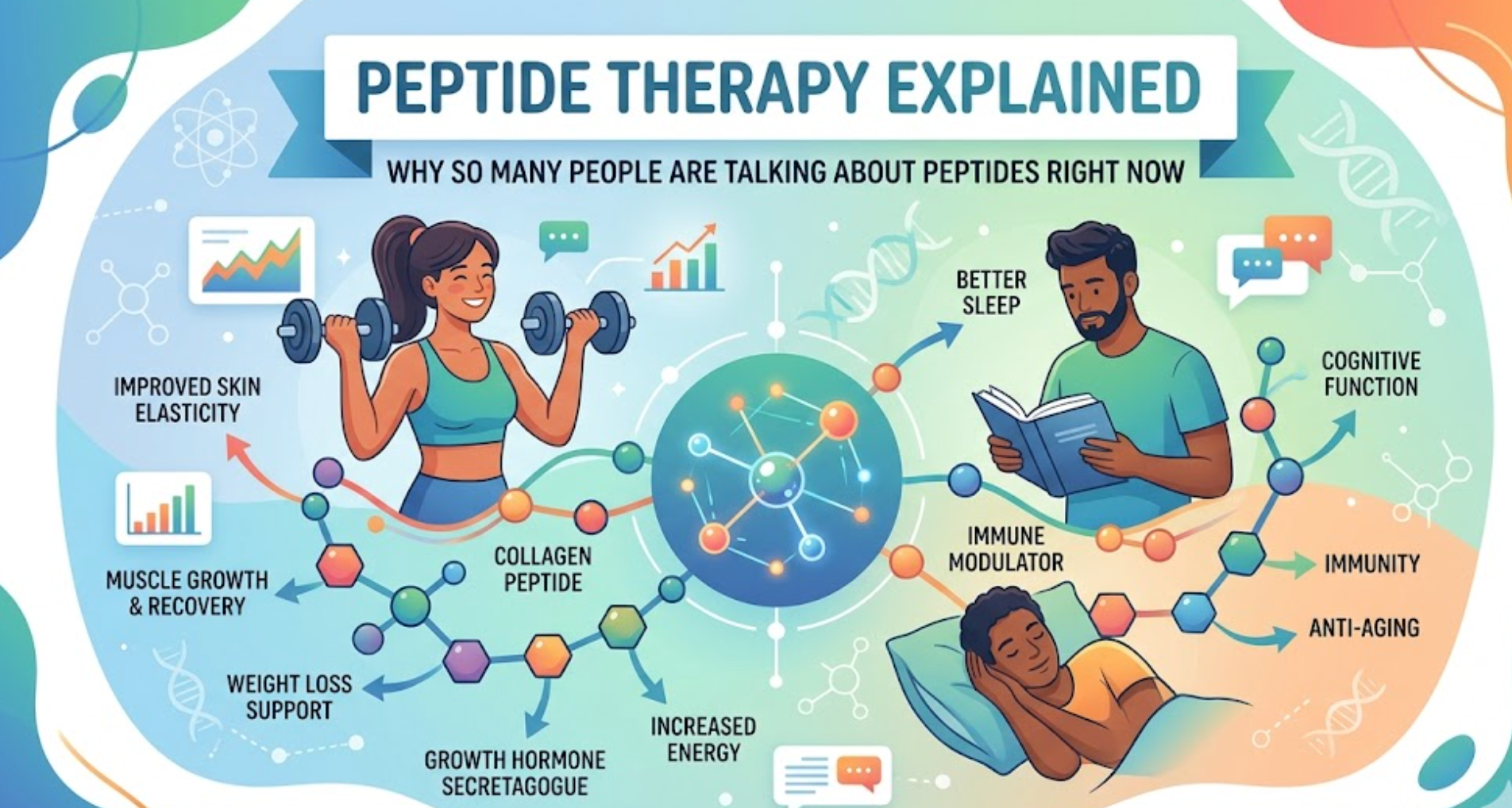
Peptide therapy has opened the door to a new way of supporting the body’s natural ability to heal, recover, and adapt over time. Among the most discussed peptides today are Sermorelin, Tesamorelin, and Ipamorelin. While they are often grouped together under the umbrella of “growth hormone peptides,” each works through a distinct mechanism and serves a very different clinical purpose. Understanding these differences is essential to choosing the right therapy—and avoiding the wrong one.
As we age, growth hormone production naturally declines. This decline doesn’t happen all at once, but slowly, often unnoticed at first. Sleep becomes lighter, recovery takes longer, muscle mass is harder to maintain, and fat—particularly around the abdomen—becomes more stubborn. Peptides offer a way to address this decline by signaling the body to produce growth hormone more efficiently rather than replacing it outright.
Sermorelin is often the first peptide considered because it closely mimics how the body is designed to function. By stimulating the pituitary gland to release growth hormone in natural pulses, Sermorelin supports gradual, sustainable improvement. Patients often notice deeper sleep, improved energy, and better recovery over time. Because its effects are gentle and physiologic, Sermorelin is best suited for individuals seeking long-term optimization rather than rapid physical changes. However, for those with pituitary dysfunction or those looking for immediate body recomposition, Sermorelin may not provide the intensity needed.
Tesamorelin occupies a very different space in peptide therapy. It is significantly more potent and has a targeted effect on visceral fat—the deep abdominal fat that surrounds internal organs and drives inflammation and metabolic disease. For patients struggling with insulin resistance or stubborn abdominal weight despite disciplined nutrition and exercise, Tesamorelin can be transformative. That power, however, comes with responsibility. Tesamorelin is not appropriate for everyone and requires thorough screening and monitoring. When used correctly, it can improve metabolic health; when used indiscriminately, it can introduce unnecessary risk.
Ipamorelin offers a third path. Rather than focusing on metabolic change or broad optimization, Ipamorelin supports growth hormone release with minimal stimulation of stress hormones. This makes it especially valuable for patients focused on recovery, sleep quality, or injury healing. Its effects are subtle but meaningful, particularly when used as part of a larger, personalized protocol.
At AyaFusion, peptide therapy is never about chasing outcomes—it’s about matching the right tool to the right body at the right time. Growth hormone peptides are powerful, but their real value lies in thoughtful, individualized use.

What Does Healthy Aging Actually Mean? Building Strength, Energy, and Resilience for the Years Ahead