Peptide Therapy Explained: Why So Many People Are Talking About Peptides Right Now
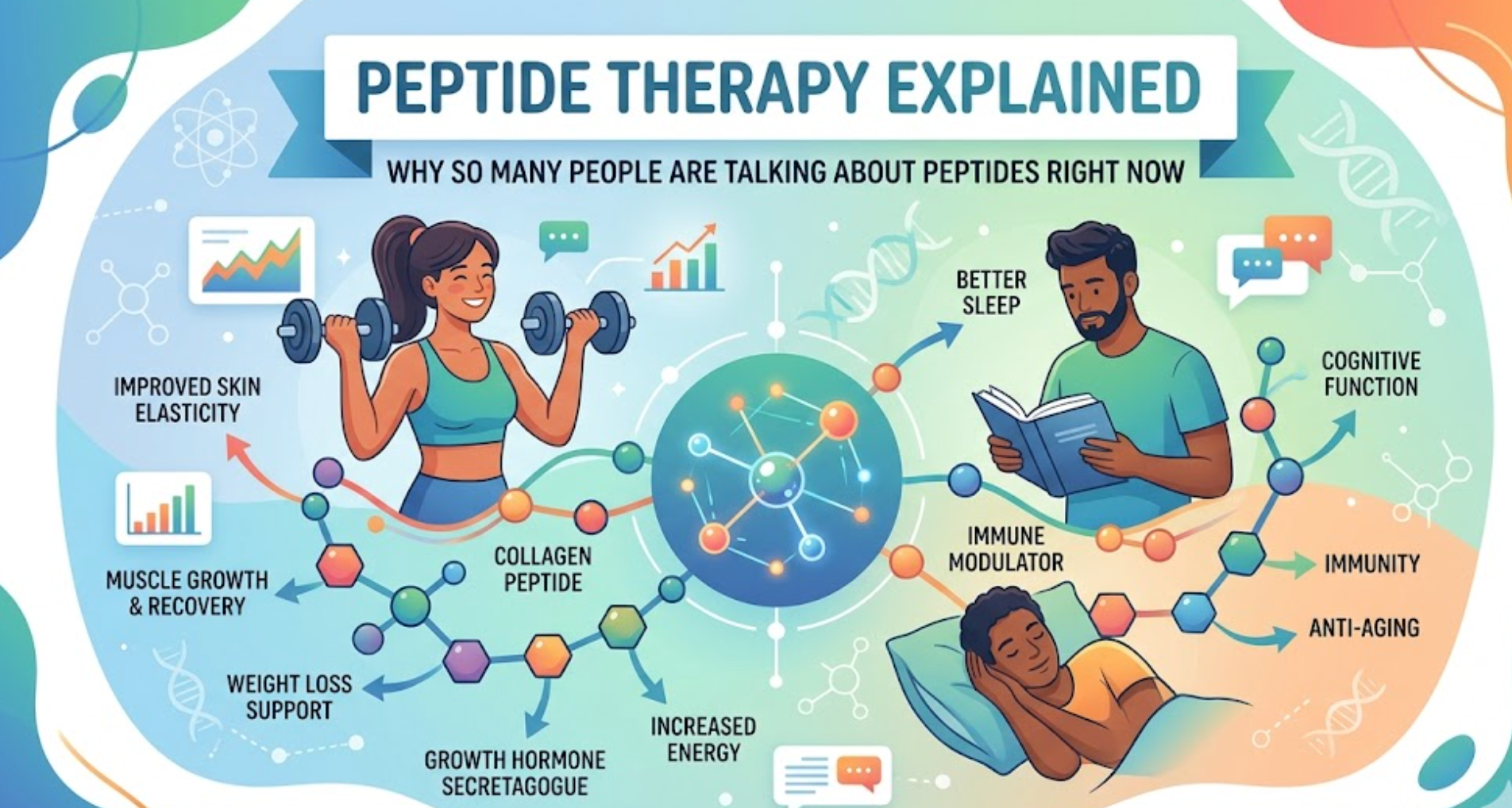
A few years ago, most people had never heard the word peptides outside of a skincare commercial.
Now they’re everywhere.
Longevity podcasts. Recovery clinics. Fitness communities. Biohacking forums. Social media.
And with that attention has come a predictable mix of fascination, confusion, and exaggeration.
Some people talk about peptides like they’re futuristic miracle drugs. Others dismiss them entirely as another wellness trend.
The reality is far less dramatic—and far more interesting.
At its core, peptide therapy is about supporting systems the body already uses naturally for repair, recovery, signaling, and regulation.
What Peptides Actually Are
Peptides are short chains of amino acids that function as signaling molecules throughout the body.
Your body already produces peptides naturally. They’re involved in tissue repair, inflammation regulation, metabolism, hormone signaling, sleep, recovery, and cognitive function.
Therapeutic peptides are designed to mimic or support some of these natural signals.
- Tissue repair
- Inflammation regulation
- Metabolism
- Hormone signaling
- Sleep and recovery
- Cognitive function
Why Interest in Peptides Has Increased So Quickly
Most people seeking peptide therapy are not looking for dramatic overnight transformation.
They notice recovery takes longer, energy feels less reliable, and injuries don’t heal the way they once did.
This middle ground—between optimal function and obvious illness—is where peptide therapy often enters the conversation.
Recovery, Healing, and Physical Resilience
One of the most common reasons people explore peptide therapy is recovery.
This includes exercise recovery, chronic inflammation, tendon or ligament strain, and general wear and tear.
Certain peptides are used clinically because of their potential role in supporting tissue repair and recovery signaling pathways.
- Exercise recovery
- Chronic inflammation
- Soft tissue injuries
- Tendon or ligament strain
- General physical wear and tear
Peptides and the Conversation Around Aging
Aging is often experienced functionally before it is noticed cosmetically.
Reduced resilience, slower recovery, changes in body composition, and lower energy are all part of the conversation.
Peptides may help support systems that no longer function as efficiently as they once did.
The Problem With the Online Peptide World
The online peptide world is full of exaggerated claims and misinformation.
Peptide therapy is not a substitute for sleep, nutrition, exercise, stress management, or appropriate medical care.
Medical oversight matters because not every peptide product online is legitimate or clinically appropriate.
A More Realistic Way to Think About Peptide Therapy
The best way to think about peptide therapy is not as a shortcut—but as support.
Support for recovery, resilience, energy, healing, and metabolic function.
For many people, gradual improvements in how they sleep, recover, think, and function can meaningfully improve quality of life.
A Final Word
The growing interest in peptides reflects a broader shift toward supporting function earlier and more proactively.
Peptide therapy is not hype or magic—but for the right person, it can be meaningful support.
Explore Peptide Therapy at Ayafusion
Ayafusion offers peptide therapy designed to support recovery, resilience, energy, and overall wellness.
If you’re considering whether peptide therapy may be appropriate for your goals, we can help determine a medically guided approach based on your health history and priorities.
Ayafusion provides peptide therapy in Downers Grove and the greater Chicago area, serving individuals looking for a more personalized and clinically guided approach to wellness and longevity.
Many clients searching for peptide therapy near Chicago, healing peptides, or wellness peptides in Illinois find us through referrals and educational resources like this.


What Does Healthy Aging Actually Mean? Building Strength, Energy, and Resilience for the Years Ahead